
Recent studies have shown that there is an increase of incidence of medical emergencies and here is no defined place where medical emergencies can strike. It can happen anywhere at any time and when it happens we are not prepared to handle the situation. The first few minutes can change the entire course of survival.


School Workshops
The Delhi Commission for Protection of Child Rights (DCPCR) strongly recommends that every student and staff member of every school should undergo CPR training. We have developed courses which meet DCPCR requirements which enables students and staff members to recognize and manage a life threatening emergencies and save lives.
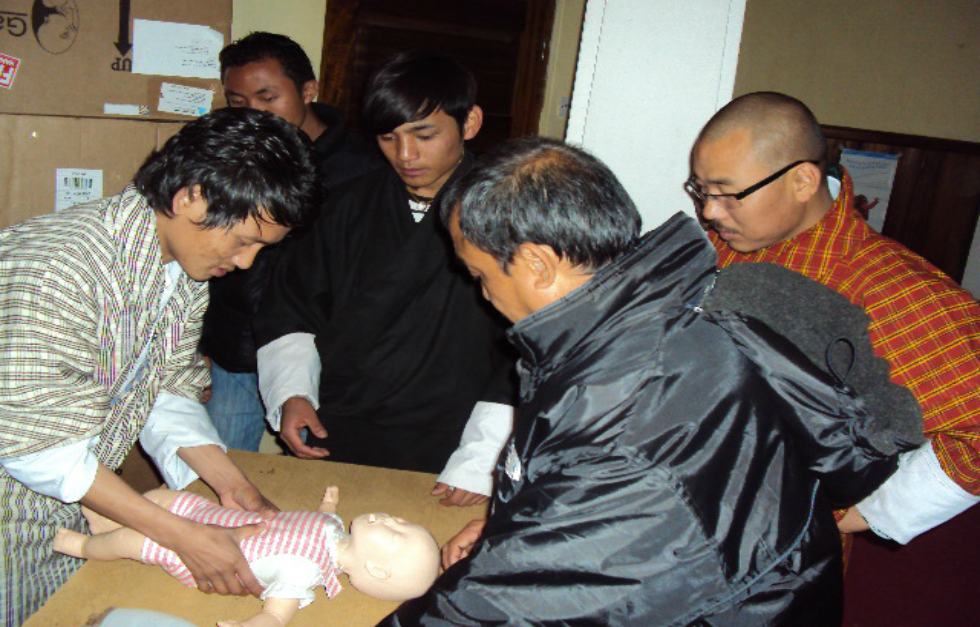
Disaster Management
India is vulnerable in varying degrees to a large number of natural as well as man-made disasters. As stated in the National Policy on Disaster Management 2009 in India, 58.6 per cent of the landmass is prone to earthquakes of moderate to very high intensity over 40 million hectares is prone to floods and river erosion of the 7,516 kms long coastline, close to 5,700 kms is prone to cyclones and tsunami 68 per cent of the cultivable area is vulnerable to drought and hilly areas are at risk from land slides and avalanches. Vulnerability to man made disasters and emergencies. Heightened vulnerabilities to disaster risk can be related to expanding population, environmental degradation, unplanned urbanization, industrialization etc. with in high-risk zones. To handle the situation training and development is the most important way to mitigate and save many lives.
Telemedicine
Basic Issue:
One of the greatest challenges facing Indian healthcare system is to provide quality care to the large segment of the population, which does not have access to specialty physicians because of factors such as geographic limitations or socioeconomic conditions.
Solution: The use of technology to deliver health care from a distance, or telemedicine, has been demonstrated as an effective way of overcoming certain barriers to care, particularly for communities located in rural and remote areas. In addition, telemedicine can ease the gaps in providing crucial care for those who are underserved, principally because of a shortage of sub-specialty providers. The use of telecommunications technology for the purpose of improving health care delivery to rural and underserved populations.
Telemedicine
Sudden cardiac arrest can to anyone, anytime and anywhere. You need additional power to save a life and that is AED (automated external defibrillator) which can really save lives.